• Skip to primary navigation
  • Skip to main content
Logo

Work Zone Safety Information Clearinghouse

Library of Resources to Improve Roadway Work Zone Safety for All Roadway Users

  • About
  • Newsletter
  • Contact
  • X
  • Facebook
  • LinkedIn

  • Work Zone Data
    • At a Glance
    • National & State Traffic Data
    • Work Zone Traffic Crash Trends and Statistics
    • Worker Fatalities and Injuries at Road Construction Sites
  • Topics of Interest
    • Advancing Nighttime Work Zone Safety
    • Commercial Motor Vehicle Safety
    • Smart Work Zones
    • Transportation Management Plans
    • Accommodating Pedestrians
    • Worker Safety and Welfare
    • Project Coordination in Work Zones
  • Training
    • Online Courses
    • FHWA Safety Grant Products
    • Toolboxes
    • Flagger
    • Certification and
      Accreditation
    • For New Drivers
  • Work Zone Devices
  • Laws, Standards & Policies
  • Public Awareness
  • Events
  • Contact
  • Search

Topics of Interest

Topics of Interest

  • Commercial Motor Vehicle Safety
  • Smart Work Zones
  • Transportation Management Plans
  • Accommodating Pedestrians
  • Worker Safety and Welfare
  • Project Coordination in Work Zones

Advancing Nighttime Work Zone Safety

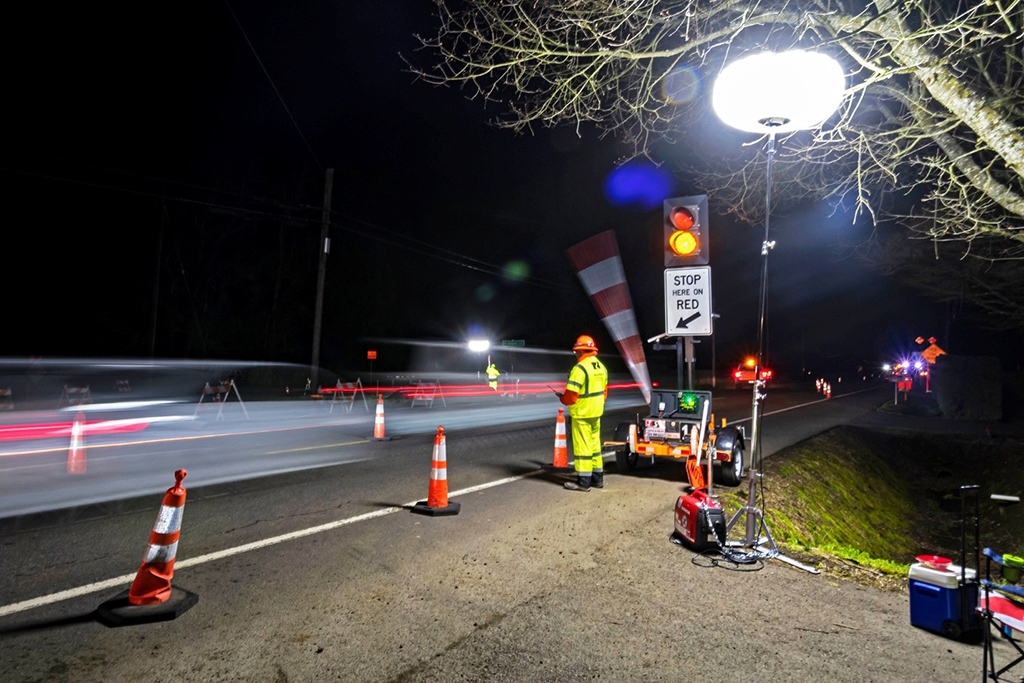
Road construction worker in high-visibility clothing directing traffic at a nighttime work zone with traffic cones, warning signs, and bright work lights.

Source: Oregon DOT

To reduce mobility delays, work activities are shifting from day to night. This shift has led to increased safety risks for all road users including workers. These risks include:

  • Driver fatigue
  • Driver impairment
  • Driver confusion (i.e., what’s ahead?)
  • Lighter traffic volumes leading to higher speeds
  • Driver impatience
  • In-cab vehicle distractions
  • Low-quality traffic control devices (e.g., markings, signs)
  • Low visibility combined with unanticipated roadway design changes (e.g., cone/drum placement, glare, weather conditions, opposing traffic)

Between 2020 and 2024, 52 percent of all fatal work zone crashes occurred at night1.

The Every Day Counts Initiative for Advancing Nighttime Work Zone Safety (ANWZS) helps reduce serious injury and fatal crashes during nighttime operations by making work zones safer, more predictable, and more efficient through the implementation of innovative work zone safety strategies.

The ANWZS initiative promotes a variety of strategies and tools that advance lighting and visibility, provide smarter traffic control, and enhance operations. Collectively, deployment of these strategies and tools improves safety, increases operational efficiency, and enhances risk management in work zones at night.  Specifically:

  • It helps reduce serious crashes by implementing better visibility, traffic control, and monitoring.
  • It increases the efficiency of  nighttime work zones using data-driven planning, smarter equipment, and standardized operations.
  • It enhances risk management through actionable guidance on proven practices and technologies to support agency decision-making.

Additional information on nighttime work zone strategies can be found here and here.

ANWZS addresses challenges through four focus areas:

Lighting Strategies

Lighting strategies can help to reduce glare, improve driver abilities to detect hazards, and help to decrease driver and worker reaction time. This can lead to lower and safer travel speeds through the work zone and enhanced worker safety.

Lighting strategies may include:

  • Standards and Specifications. The implementing agency has requirements, in this case for minimum illumination levels in work zones stated in agency standards or specs, that exceed those that are nationally mandated, such as by the Manual of Uniform Traffic Control Devices (MUTCD).
  • Vehicle Warning Lights. The use of non-traditional colored warning lights on construction vehicles. While amber is the traditional color of flashing warning light used on construction vehicles, some states use green or blue lights, as allowed by State law, to bring greater attention to construction and maintenance vehicles.
  • Anti-Glare Devices. The use of devices such as glare screens and non-glare balloon lighting can reduce glare for all road users, including workers.
  • Lighting-Specific Training. Training can help improve practitioner awareness of appropriate lighting conditions to better plan and set up lighting for work zones at night.

Case Studies

Evaluation Studies

  • The Effect of Nighttime Lighting Systems on Workers’ Visibility and Safety, Final Report
  • The Effect of Nighttime Lighting on Construction Workers’ Safety

Guidance Documents

  • NCHRP Research Report 1085: Development of Guidelines for Vehicle and Equipment Marking and Lighting

Design and Operating Procedures, Standards, Specifications and Plans

  • Maryland State Highway Administration Vehicle Conspicuity Requirements
  • North Carolina DOT Work Zone Presence Lighting Specification
  • California’s Reflectivity for Caltrans’ vehicle fleet (law) (DOT guidance)

Personal Protective Equipment

High-visibility PPE makes workers more visible for drivers to see them from farther away and thereby help to improve safety. Strategies may include:

  • Additional High-Visibility Apparel. Apparel beyond nationally required MUTCD standards that enable the full range of motion visibility.
  • Wearable Lights. Lights placed on workers such as vests or hard hats.

Case Studies

  • Indiana DOT’s Project Greenlight Wearable Lights

Evaluation Studies

  • Use and Worker Perceptions of Wearable Lighted Apparel
  • Enhancing Caltrans Worker Visibility: Integrating Safety Lighting on High-Visibility Garment

Guidance Documents

Design and Operating Procedures, Standards, Specifications and Plans

  • Wisconsin Highway Maintenance Manual (PPE)
  • Wisconsin MUTCD (Section 6C.05 High Visibility Safety Apparel)
  • Virginia DOT’s Work Zone Field Guide (PPE requirements)
  • ANSI/ISEA 107-2020: High-Visibility Safety Apparel

Traffic Control Devices

Traffic control devices (TCDs) can make work zones easier for drivers to see from farther away, which may result in lower (and safer) travel speeds, reduced lane departure, improved lane visibility, increased driver awareness, reduced driver fatigue, and lower driver stress as they approach and travel through a work zone at night. Strategies may include:

  • Temporary Rumble Strips (TRS). TRS are required by some agencies for certain nighttime work zone conditions.
  • Channelizing Devices (above national requirements). May involve a requirement for reduced spacing or taller devices during nighttime operations.
  • Alternatives to traditional flagging. Used in high-risk scenarios to reduce worker exposure, an example is the use of automated flagger assistance device.
  • Sequential Warning Lights. Some agencies use these lights to help better delineate a merging taper in advance of a work area.
  • Reflective Temporary Pavement Markings. Markings help improve visibility under wet pavement conditions in work zones at night.

Case Studies

  • Michigan DOT’s Wet Reflective Work Zone Standard

Evaluation Studies

  • The Effectiveness of Temporary Rumble Strips in Work Zones, Final Report
  • Safety Evaluation of Sequential Warning Lights in Tapers at Nighttime Work Zones
  • Assessment of Channelizing Device Effectiveness on High Speed/High Volume Roadways

Guidance Documents

Design and Operating Procedures, Standards, Specifications and Plans

  • Virginia DOT’s Channelizing Device Visibility Requirements
  • Virginia DOT’s Markings and Visibility Policy
  • Massachusetts DOT’s Work Zone Safety Guidelines (Sequential Warning Lights)
  • California’s 12-3.36 Portable Transverse Rumble Strips

Positive Protection Devices

Positive protection devices (PPD),  can contain and redirect vehicles there at risk of intruding on the work activity area, thereby reducing the intrusion risk and improving safety of workers and the traveling public. Strategies may include:

  • Mobile barrier. Often used for short-term work and may be combined with delineators.
  • Truck mounted attenuators (TMAs). Often used in conjunction with speed feedback signs.

Case Studies

  • Optimizing Performance Mobility & Safety—Making Work Zones Work Better: Mobile Barrier Systems

Evaluation Studies

Guidance Documents

Design and Operating Procedures, Standards, Specifications and Plans

Smarter work zones (SWZs), through technology, help to reduce speeds, enhance driver awareness, and increase vehicle intrusion warning times for workers. Strategies may include:

  • Queue Warning Systems. Deployed more often at night by some agencies, particularly for long-term Interstate and lane closure projects.
  • Intrusion Detection and Alert Systems. Provide audio or visual warnings, or both, to alert workers when a vehicle is at risk of entering the work area.
  • Variable Speed Limit (VSL) signs. VSL may be deployed for nighttime resurfacing operations. Note that VSLs may be deployed to be dynamic based on real-time traffic conditions or simply present an electronic, digital display that can be used to manually reduce the speed when workers are present.

Case Studies

  • Innovative End-of-Queue Warning System Reduced Crash Potential by up to 45 Percent at Work Zones on I-35 in Central Texas
  • Mitigating Work Zone Safety and Mobility Challenges through Intelligent Transportation Systems
  • Improving Work Zone Safety with Intrusion Alarms

Evaluation Studies

  • Evaluation of the Impact of Presence Lighting and Digital Speed Limit Trailers on Interstate Speeds in Indiana Work Zones
  • Variable Speed Limits Signs: Effects on Speed and Speed Variation in Work Zones
  • An Evaluation of the Effectiveness of Digital Speed Limit Signs and Work Zone Presence Lighting on Speed Compliance During Lane Closure Operations

Guidance Documents

Design and Operating Procedures, Standards, Specifications and Plans

  • Colorado – Variable Speed Limit Guidelines

Traffic Operations

Managing traffic operations helps to reduce traffic risks, improves response times, and keeps workers safe. Strategies may include:

  • Public Engagement, such as the conduct of social media campaigns in advance of work starting.
  • Contractor Coordination, agencies may require lighting plans to be developed by the contractor and approved by the agency before work is authorized to begin.
  • Scheduling Lane Closures, agencies may consolidate extended closures or stagger closures.
  • Temporary Width Restrictions overnight, particularly reduced lane widths in a work zone.
  • Nighttime Inspections for glare control and to ensure adequate lighting.
  • Nighttime-Specific Training for agency staff and contractors to help improve compliance with nighttime specific work zone requirements.
  • Lighting Plan that can be agreed upon by agency staff and contractors for lighting conditions that improve worker visibility.
  • Real-Time Information via a public feed in the Work Zone Data Exchange specification format to facilitate real-time alerts for drivers.

Case Studies

  • Florida’s Statewide Lane Closure Notification System
  • Construction Traveler Information System Website in Texas

Evaluation Studies

  • Effective Work Zone Safety Public Outreach
  • Assessing the Impact of Training Programs for Highway Work Zone Employees

Guidance Documents

Design and Operating Procedures, Standards, Specifications and Plans

  • Vermont AOT’s Standard Specs for Construction (Nighttime Lighting Plans)
  • Missouri DOT’s 616.19 Work Zone Capacity, Queue and Travel Delay

Enforcement

Enforcement measures may be active, passive, and technology-based and can sharply reduce travel speeds in and near work zones to improve safety. Strategies may include:

  • Speed Safety Cameras (SSC), automate speed enforcement in work zones, as permissible by State law.
  • Law Enforcement Presence, may be passive or active, including the use of red and blue lights, and specifically requested for nighttime work zones.

Case Studies

  • Automated Speed Enforcement in Work Zones
  • Work Zone Speed Safety Cameras (WZSSC) in Pennsylvania
  • Case Study of New York State’s Work Zone Speed Safety Camera Program
  • Maryland – Automated Speed Enforcement and Project Coordination Technology
  • Podcast: Automated Speed Enforcement in Work Zones

Evaluation Studies

  • Evaluation of Photo Speed Enforcement (PSE) in California Work Zones
  • Vermont Speed Safety Cameras in Work Zones Report
  • Delaware Electronic Speed Safety Program Report 2022
  • Evaluation of an Automated Enforcement System in Illinois

Guidance Documents

  • Guidelines on Use of Law Enforcement in Work Zones
  • Washington State’s Speed Safety Camera Readiness Guide

Design and Operating Procedures, Standards, Specifications and Plans

  • Maryland State Highway Administration – Law Enforcement in Nighttime Work Zones
  • Model Evaluation Plan for Work Zone Speed Safety Cameras
  • Checklist for Implementing Work Zone Speed Safety Cameras

1National Highway Traffic Safety Administration Fatality Analysis Reporting System (FARS) 2020-2023 Final Files and 2024 Annual Report File. FARS data shown here are from the 50 states, the District of Columbia, and Puerto Rico. Value is based on “lighting condition” that include “dawn”, “dusk”, “dark-not lighted”, “dark-lighted”, and “dark-unknown lighting”.

Copyright © 2026 American Road & Transportation Builders Association (ARTBA). The National Work Zone Safety Information Clearinghouse is a project of the ARTBA Transportation Development Foundation. It is operated in cooperation with the U.S. Federal Highway Administration and Texas A&M Transportation Institute. | Copyright Statement · Privacy Policy · Disclaimer
American Road and Transportation Builders Association Transportation Development Foundation, American Road and Transportation Builders Association U.S. Department of Transportation Federal Highway Administration Texas A&M Transportation Institute